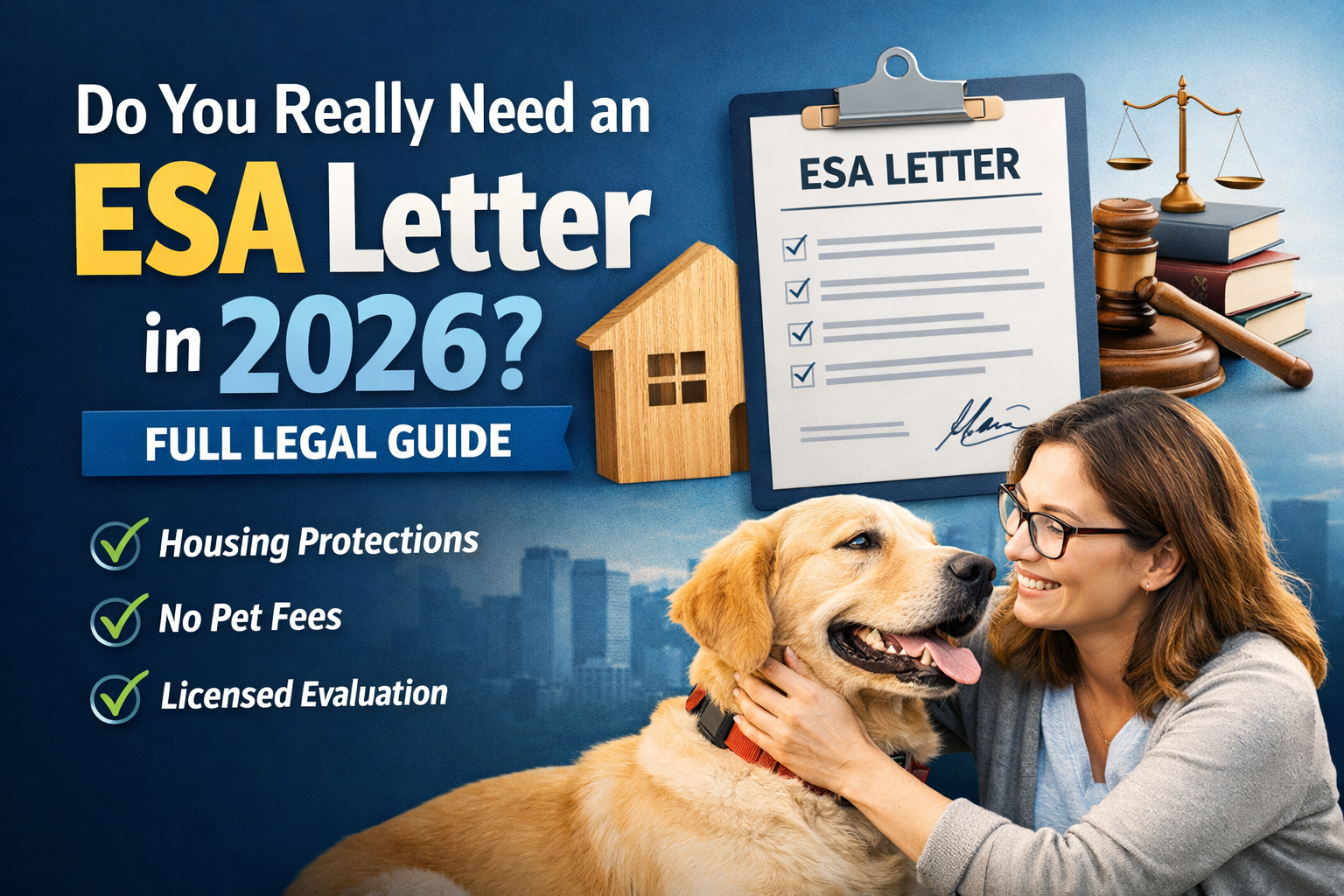
ESA Myths vs Facts: Emotional Support Animals or ESAs have become an important part of mental health support for many people dealing with anxiety, depression, PTSD, and other emotional conditions. However, there is also a lot of confusion online about what ESAs really are and what rights they provide. Many myths have spread across social media and websites, leading people to misunderstand the legal and medical reality of ESAs. In this article, we will clearly separate ESA myths from facts so you can understand everything in a simple and accurate way.
What is an Emotional Support Animal (ESA)?
An Emotional Support Animal is a pet that provides comfort and emotional stability to a person with a mental or emotional health condition. Unlike service animals, ESAs do not require special training. Their main role is to provide companionship and reduce feelings of stress, anxiety, or loneliness. A licensed mental health professional must issue an ESA letter for the animal to be recognized for housing protection under the law.
Myth 1: ESAs Are the Same as Service Animals
Fact: ESAs and service animals are completely different
One of the most common misunderstandings is that Emotional Support Animals and service animals are the same. This is not true. Service animals are specially trained to perform tasks for people with disabilities, such as guiding visually impaired individuals or alerting someone before a seizure. ESAs do not have any training requirements and only provide emotional comfort. Because of this, ESAs do not have public access rights like service animals.
Myth 2: You Can Get an ESA Letter Without Evaluation
Fact: A valid ESA letter requires a licensed therapist
Many websites claim you can get an ESA letter instantly without speaking to a professional. This is false. A legitimate ESA letter must come from a licensed mental health professional after a proper evaluation of your mental health condition. The therapist must determine that an emotional support animal is part of your treatment plan. Without this step, the letter has no legal value.
Myth 3: ESA Registration Makes Your Pet Official
Fact: There is no official ESA registry
A very common scam online is ESA registration or certification websites. These websites often sell ID cards, certificates, or registration numbers. The truth is that there is no official government registry for ESAs in the United States. What matters legally is the ESA letter from a licensed therapist, not any registration or certificate.
Myth 4: Landlords Can Always Reject ESAs
Fact: ESAs are protected under housing laws
Under the Fair Housing Act, tenants with valid ESA letters are entitled to reasonable accommodation in housing. This means landlords generally cannot refuse ESAs or charge pet fees, deposits, or monthly pet rent. However, there are exceptions if the animal is dangerous, causes major damage, or creates a direct threat to others.
Myth 5: ESAs Can Go Anywhere Like Service Dogs
Fact: ESAs do not have public access rights
Unlike service animals, ESAs are not allowed in all public places. This includes restaurants, shopping malls, hotels, and most stores. Businesses are not legally required to allow ESAs inside. Only trained service animals have full public access rights under disability laws.
Myth 6: Any Pet Automatically Qualifies as an ESA
Fact: A professional must approve the animal
While many types of animals can become ESAs, they do not automatically qualify. A licensed mental health professional must determine that your specific animal provides emotional support that benefits your condition. Without professional approval and documentation, your pet is not legally recognized as an ESA.
Myth 7: ESA Letters Never Expire
Fact: ESA letters usually need renewal
ESA letters are typically valid for a limited time, often around 12 months. After that period, a renewal evaluation is usually required. This ensures that your mental health condition is still being monitored and that the ESA remains part of your treatment plan.
Myth 8: ESAs Guarantee Airline Travel
Fact: Most airlines no longer accept ESAs
In the past, Emotional Support Animals were commonly allowed on flights. However, airline policies have changed in recent years. Most airlines no longer recognize ESAs for free travel. Psychiatric Service Dogs may still have travel protections, but ESAs generally do not.
Myth 9: ESA Letters Are Not Legally Important
Fact: ESA letters provide legal housing protection
A valid ESA letter is an important legal document under housing laws. It protects tenants from unfair housing discrimination and ensures they can live with their emotional support animal. Without an ESA letter, these legal protections do not apply.
Myth 10: Getting an ESA Letter Is Complicated
Fact: The process is simple but must be legitimate
Many people think getting an ESA letter is difficult or time-consuming. In reality, the process is straightforward when done properly. It usually involves an online questionnaire, evaluation by a licensed therapist, and approval if you qualify. However, it must always follow legal and medical standards.
Benefits of Understanding ESA Facts Clearly

When you understand the truth about ESAs, you can avoid scams and make better decisions. You also gain clarity about your rights in housing situations and avoid unnecessary stress when dealing with landlords or travel policies. Most importantly, you ensure that your ESA letter is legitimate and legally valid.
Conclusion
Emotional Support Animals play a meaningful role in improving mental health, but there is a lot of misinformation surrounding them. By separating myths from facts, you can clearly understand what ESAs are, how they work, and what legal rights they provide. Always remember that a valid ESA letter must come from a licensed professional and is the only document that provides real housing protection. Understanding these facts helps you stay informed, avoid scams, and protect your emotional well-being in the right way.